
Disciplined Trade, Protected Jobs: Why the Cooking Oil Transit Directive Is a Necessary Intervention
Jobs do not disappear overnight. They erode gradually through shrinking margins, delayed investments, and market distortions that policymakers sometimes overlook.
In the oil palm value chain, I have seen this erosion up close.
For over sixteen years, I have sat at bargaining tables negotiating wage adjustments for workers whose livelihoods depend on the stability of this sector. I have listened to employers cite unfair competition and revenue leakages as justification for restructuring, production slowdowns, and, in some cases, redundancies.
That is why the Government’s recent directive requiring cooking oil consignments destined for onward transit to landlocked countries to pass exclusively through Ghana’s seaports is not just a customs measure.
It is a necessary intervention to protect jobs.
The Real Cost of Leakages
Transit trade plays a legitimate and strategic regional role. Ghana’s geographic position makes us a natural gateway to landlocked neighbours. However, transit must not become a loophole.
When goods declared for onward transit are undervalued, weakly monitored, or diverted into the domestic market without meeting equivalent fiscal obligations, compliant enterprises are placed at a structural disadvantage.
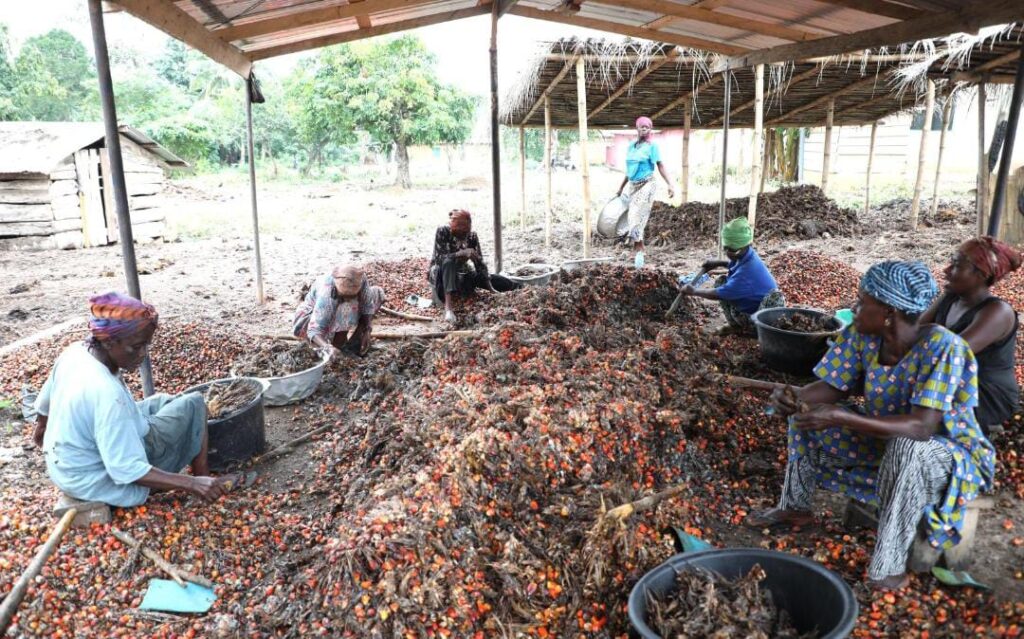
And in the oil palm value chain, from plantation workers and mill operators to production operators, laboratory technicians, weighbridge personnel, refinery technicians, warehouse teams, transport operators, sales and marketing staff, and distributors, employment security rests on one fundamental condition: *a stable and fair market.
When that market is distorted, the consequences are predictable:
Margins shrink
- Investment decisions are delayed
- Wage negotiations become defensive
- Workforce reductions enter the conversation
Workers should not bear the cost of regulatory gaps.
Why Routing Through Seaports Matters
Ghana’s seaports operate with enhanced valuation systems, electronic cargo tracking, scanning infrastructure, and layered customs controls. These mechanisms significantly reduce the risk of under-declaration and diversion.
Routing transit cooking oil consignments through high-control gateways is therefore not a restriction of trade. It is an enforcement alignment;
- It strengthens traceability.
- It restores valuation discipline.
- It reduces systemic leakages.
And in doing so, it reinforces the integrity of the domestic market.
Industrial Sustainability and Decent Work
No serious industrial policy can ignore the link between market integrity and job security. Domestic processors and compliant importers cannot sustainably employ workers while competing against products that bypass equivalent regulatory obligations.
A fair competition state policy protects enterprise and protected enterprise sustains employment.
It therefore should be understood that, revenue protection is not separate from job protection, it is foundational to it.
In every wage negotiation, we speak about productivity, competitiveness, and sustainability. Those conversations cannot be meaningful if enforcement gaps quietly undermine the very enterprises expected to provide decent work.
A Governance Signal
Beyond the commodity itself, the directive signals institutional seriousness. It reflects a recognition that where monitoring infrastructure is strongest, enforcement should be consolidated.
From a labour governance perspective, this is responsible policymaking. It aligns customs administration with industrial policy and job protection.
About the Author
Kenneth K. Koomson the Deputy Secretary General of the Ghana Federation of Labour, a trade union leader representing workers in Ghana’s oil palm value chain, with over two decades of experience in collective bargaining and industrial relations. He writes regularly on labour governance, industrial policy, and employment sustainability.