
-
WHEN WORK MIGRATES TO PLATFORMS, RIGHTS MUST FOLLOW: CONVENTION NO. 193, PRIMACY OF FACTS AND EMPLOYER RESPONSIBILITY
Introduction In many work relationships, the name given to the worker does not always reflect the reality of the work. A person may be called a “contractor,” “consultant,” “agent,” “partner,” or “self-employed person,” but the…
-
THE RIGHT TO STRIKE HAS BEEN VINDICATED: WHAT THE ICJ’S RULING MEANS FOR GHANAIAN WORKERS
Introduction The right to strike occupies a central place in labour relations. It is one of the principal means by which workers and their organizations may, in lawful circumstances, defend their economic and social interests.…
-
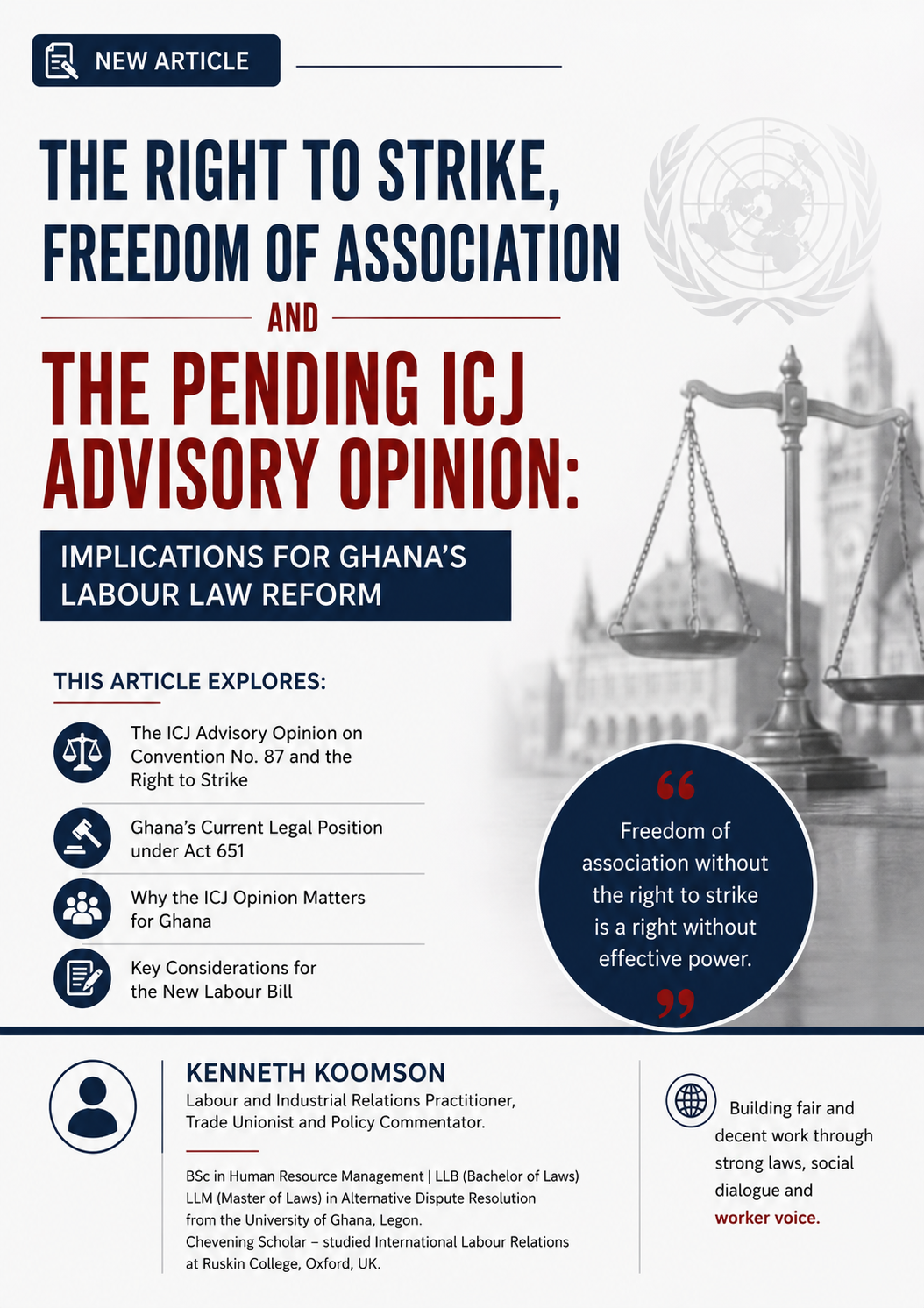
THE RIGHT TO STRIKE, FREEDOM OF ASSOCIATION AND THE PENDING ICJ ADVISORY OPINION: IMPLICATIONS FOR GHANA’S LABOUR LAW REFORM.
Introduction The right to strike occupies a central place in labour relations. It is one of the principal means by which workers and their organizations may, in lawful circumstances, defend their economic and social interests.…
-
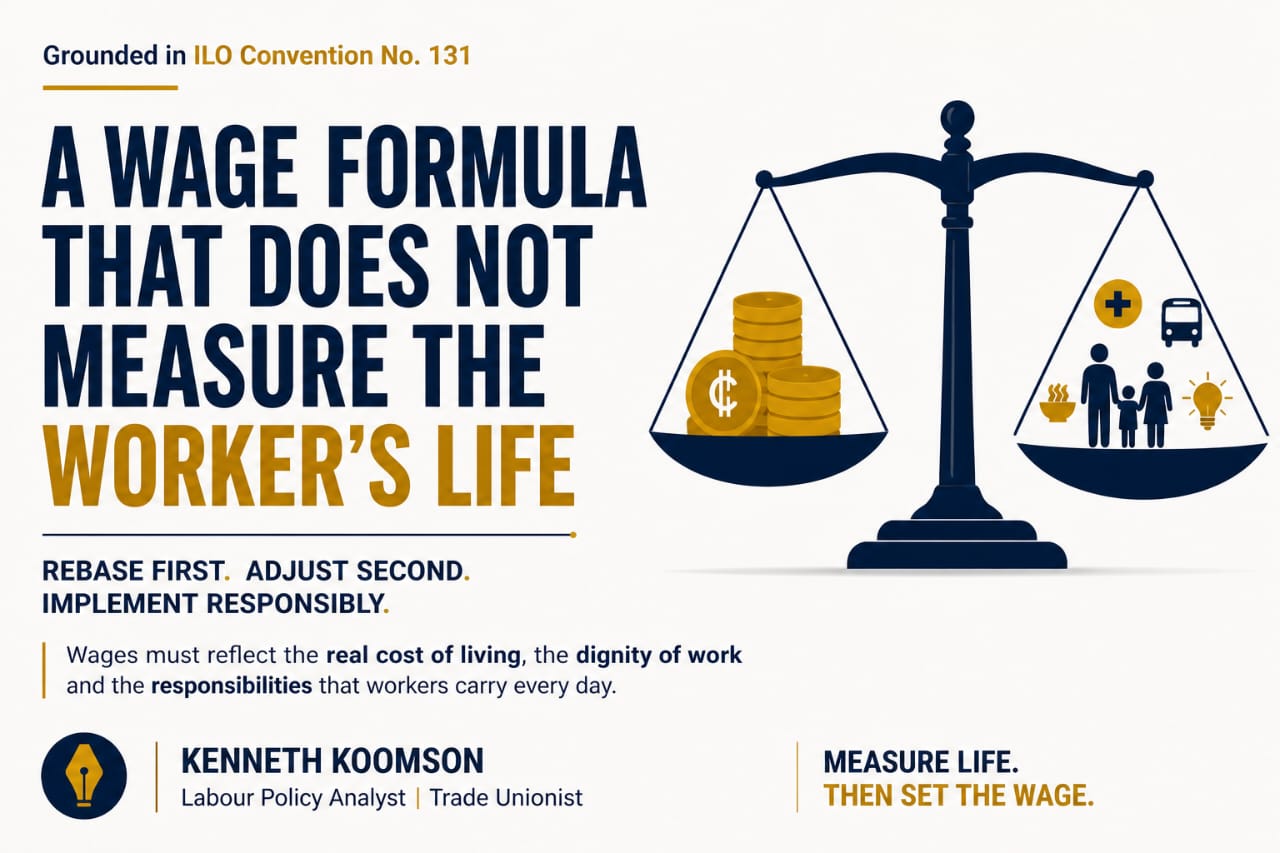
A Wage Formula That Does Not Measure the Worker’s Life Cannot Determine the Worker’s Wage:Why Ghana’s minimum wage framework must move from abstract economic variables to a worker-needs benchmark.
Ghana has a long history of negotiating the National Minimum Wage through tripartite engagement among Government, Employers and Organised Labour. That history reflects an important national commitment; that wages at the bottom of the labour…
-

The World of Work with Kenneth K. Koomson
Real conversation on labour, leadership, and society, grounded in practice, driven by purpose.
-

Redundancy Under Section 65 of Act 2003, (Act 651) – The Primacy of Disclosure.
Abstract Redundancy under Ghana’s Labour Act, 2003 (Act 651) is often approached as a negotiation exercise centred on severance. This article argues that such an approach departs from the structure of Section 65. Properly interpreted,…
-

A Critical Analysis of Ghana’s Public Sector Pay Reform, Labour Law Interface, and the Question of Negotiation in Transition
Introduction The governance of public sector compensation is a central pillar of modern statecraft, shaping fiscal sustainability, labour relations, equity, and institutional credibility. In Ghana, efforts to reform public sector pay have historically focused on…
-

Disciplined Trade, Protected Jobs: Why the Cooking Oil Transit Directive Is a Necessary Intervention
Disciplined Trade, Protected Jobs: Why the Cooking Oil Transit Directive Is a Necessary Intervention Jobs do not disappear overnight. They erode gradually through shrinking margins, delayed investments, and market distortions that policymakers sometimes overlook. In…
-

Digital Transition Without Justice Is a Risk Africa Cannot Afford
Digital Transition Without Justice Is a Risk Africa Cannot Afford IntroductionIn 2024, I had the privilege of participating in a month-long study conference convened by the International Labour Organization through its ACTRAV programme in Geneva.…