
Introduction
The governance of public sector compensation is a central pillar of modern statecraft, shaping fiscal sustainability, labour relations, equity, and institutional credibility. In Ghana, efforts to reform public sector pay have historically focused on addressing fragmentation, disparities, and inconsistencies across the public service. The establishment of the Fair Wages and Salaries Commission (FWSC) marked a significant milestone, providing a structured framework for job evaluation, salary administration, grading, and the rationalisation of allowances.
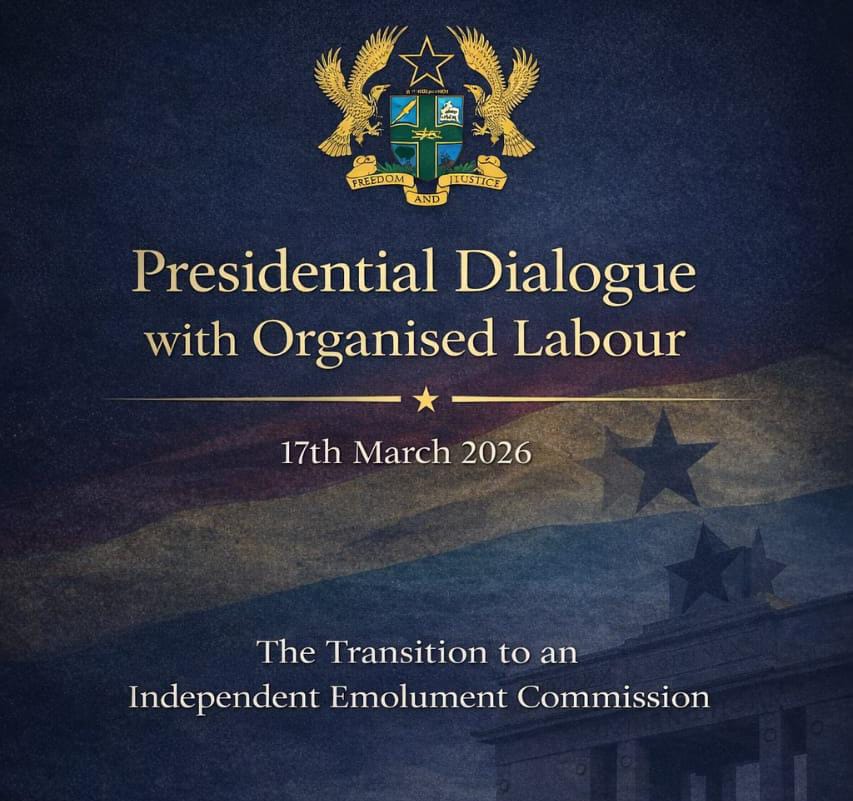
The Government’s proposal to transition to an Independent Emoluments Commission (IEC) signals a new phase in this reform trajectory. The reform seeks to establish a transparent, rules-based, and evidence-driven system for determining public sector compensation, guided by productivity, labour market dynamics, fiscal sustainability, and national development priorities. Central to this transition is the designation of 2026 as a transition year, during which comprehensive renegotiation of conditions of service across the public sector will be moderated in favour of targeted adjustments and system redesign.
At the same time, Ghana is undertaking a review of its labour law framework. This coincidence is not incidental. It raises important questions about how wage governance reform, labour rights, and institutional design should be aligned within a coherent legal architecture.
This article addresses three interrelated questions. First, how should the transition from the FWSC to the IEC be understood within the evolution of Ghana’s public sector pay governance system? Second, is it acceptable or prudent for organised labour to accept a temporary moderation of full-scale negotiations on conditions of service during the transition period? Third, what role, if any, should labour law reform play in embedding or supporting the emerging compensation framework?
Analysis
The Reform as Institutional Evolution
The proposed transition is best understood not as a displacement of the FWSC, but as an institutional evolution. The FWSC is explicitly positioned as the technical cornerstone of the new system, indicating continuity in analytical capacity and policy infrastructure.
The distinguishing feature of the proposed IEC lies in its broader institutional ambition. It seeks to expand the scope of compensation governance beyond the public service to include public sector institutions, agencies, and state-owned enterprises, with a longer-term objective of incorporating Article 71 officeholders following constitutional reform. It also introduces a stronger emphasis on independence, transparency, and rules-based decision-making.
In this sense, the reform reflects a shift from a technically grounded but statutorily constrained framework toward a more integrated and potentially constitutionally anchored system. It is therefore more accurately characterised as a reconfiguration of authority and scope, rather than a reinvention of function.
From Fragmentation to System Coherence
A central driver of the reform is the need to address persistent fragmentation in Ghana’s compensation system. While the FWSC has improved coherence within the public service, disparities remain across sectors, institutions, and categories of public office. The exclusion of Article 71 officeholders and the differentiated pay regimes across public entities have limited the emergence of a unified system.
The proposed IEC seeks to address this structural gap by anchoring compensation governance within a national emoluments framework, supported by a comprehensive policy. This aligns with international reform trajectories, where countries have moved from fragmented, negotiation-driven arrangements toward more coordinated and policy-driven systems in response to fiscal pressures and equity concerns.
At its core, the reform represents a transition from a segmented wage-setting system toward a coherent national compensation framework.
Reframing Negotiation: Legal and Institutional Clarifications
A proper assessment of the reform requires a clear distinction between negotiations on conditions of service and core wage-setting mechanisms.
Conditions of service typically include allowances, benefits, and workplace arrangements negotiated at sectoral or institutional levels. By contrast, salaries and base pay structures represent the core elements of compensation and are increasingly being repositioned within a centralised and rules-based framework.
The current policy direction does not suspend all wage negotiations. National Minimum Wage negotiations, undertaken by the National Tripartite Committee pursuant to section 113(a) of the Labour Act, and public sector base pay negotiations linked to section 19 of the Public Financial Management Act, are expected to proceed. These processes are grounded in statutory mandates and remain integral to the wage governance system.
The reform therefore reflects a rebalancing rather than a withdrawal of negotiation. While comprehensive renegotiation of conditions of service is being moderated during the transition period, core wage-setting processes remain intact. This distinction is critical in avoiding misinterpretation and in situating the reform within its proper legal and institutional context.
The Transition Year, Reform Sequencing and Wage Stabilisation
The designation of 2026 as a transition year is a deliberate policy choice. It reflects a sequencing approach in which system design precedes full-scale implementation.
The temporary moderation of full renegotiation of conditions of service can be understood as a stabilisation measure aimed at preventing fragmented or incremental adjustments from undermining the coherence of the emerging framework. International experience supports such approaches where they are clearly defined, time-bound, and accompanied by ongoing stakeholder engagement.
However, the success of this approach depends on maintaining credibility. A transition period must be anchored in transparency, defined timelines, and demonstrable progress. Without these, a temporary moderation risks being perceived as an indefinite constraint.
Acceptability and Prudence: A Balanced Assessment
From a policy perspective, the acceptability of moderating full-scale negotiations on conditions of service depends on the conditions under which it is undertaken.
There are arguments in favour. A temporary pause may support the development of a more coherent and equitable system by preventing distortions during reform. It may also be justified where macroeconomic constraints require disciplined wage management. Furthermore, it provides an opportunity for organised labour to shift from negotiating fragmented outcomes to influencing system design.
However, there are also legitimate concerns. Collective bargaining is a core principle of labour relations, and any limitation must be carefully managed. The absence of clarity, consultation, or time-bound commitments risks undermining trust. International labour standards emphasise that social dialogue must remain central, even during reform.
The issue, therefore, is not whether negotiation should occur, but how it is structured during transition. A credible approach is one that reorients engagement rather than suspends it, ensuring that labour remains actively involved in shaping the emerging framework.
The Labour Law Interface: Alignment Without Absorption
The concurrent review of Ghana’s labour law presents an opportunity to strengthen the interface between collective bargaining and the emerging national emoluments framework. However, careful legal design is required.
Labour law can play a complementary role by:
- clarifying the relationship between collective bargaining and national pay frameworks;
- safeguarding structured engagement and tripartite consultation;
- distinguishing negotiable elements of conditions of service from system-determined components of compensation; and
- embedding principles of fairness, transparency, and equity in wage governance.
At the same time, the core architecture and authority of the Independent Emoluments Commission should not be embedded within labour legislation. Instead, it should be anchored in a dedicated legal framework, with eventual constitutional backing. This ensures institutional clarity and avoids conflating labour rights with compensation governance mechanisms.
The appropriate approach is therefore one of alignment without absorption: labour law supports and legitimises the system, while the IEC framework defines and governs it.
Conditions for Effective Reform
The effectiveness of the reform will depend on several interdependent conditions:
- legal clarity, defining institutional mandates and relationships;
- technical capacity, preserving and strengthening analytical capabilities;
- transparent criteria, ensuring consistent and evidence-based decision-making;
- structured engagement, maintaining labour participation and legitimacy; and
- phased implementation, aligned with legislative and constitutional processes.
These elements will determine whether the reform delivers substantive transformation or remains largely procedural.
Conclusion
The proposed transition from the Fair Wages and Salaries Commission to an Independent Emoluments Commission represents a significant recalibration of Ghana’s public sector pay governance framework. The reform is best understood as an institutional evolution, aimed at consolidating existing technical foundations within a more integrated, coherent, and authoritative system.
The moderation of full renegotiation of conditions of service during the transition period reflects a strategic effort to stabilise the system while a new framework is designed. From a policy standpoint, this approach can be justified where it supports coherence and fiscal sustainability. However, its legitimacy depends on its execution particularly the extent to which it remains transparent, time-bound, and anchored in meaningful social dialogue.
The ongoing labour law review presents an opportunity to reinforce this transition by strengthening the interface between collective bargaining and the emerging compensation framework, while preserving the integrity of both.
Ultimately, the success of the reform will depend on achieving a careful balance: between centralisation and participation, between technical coherence and social legitimacy, and between reform discipline and institutional trust. If that balance is achieved, the transition has the potential to anchor a more equitable, sustainable, and credible system of public sector compensation in Ghana.
Author
Kenneth K. Koomson
Deputy Secretary-General (Operations), Ghana Federation of Labour (GFL)
Labour Policy Analyst | The World of Work / Policy Pulse